Building a CHIP-8 Emulator in Rust

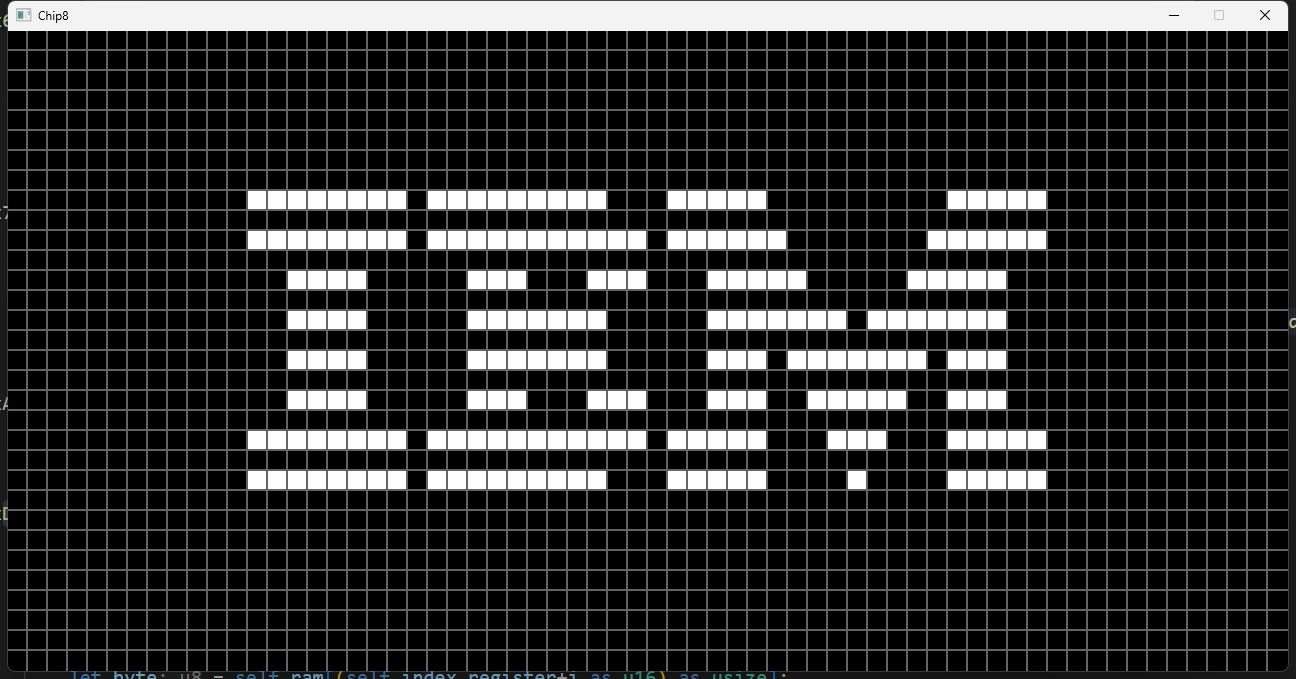
CHIP-8 emulator window in Rust showing the IBM logo test ROM

This post brings together the five entries of my development log for a CHIP-8 emulator written in Rust with SFML. The code is in the rust-chip8 repository.

Day 1

Continuing my quest for learning Rust, I elaborated a list of potential projects. I started a couple privately but then I found the suggestion of creating a Chip-8 emulator somewhere. Unfortunately, I don’t remember where it was.

I started reading about the programming language and consumed resources like CHIP-8 Classic Manual, Cowgod’s Chip-8 Technical Reference v1.0, and Guide to making a CHIP-8 emulator. The latter kind of ruined the experience because it explains it so well, it also suggested implementing the opcodes needed to get the IBM Logo ROM running. Speaking of ROMs, I got a set cloning this repository.

I started with my code reading the ROM file to a byte vector and the basic rendering window. Then I started creating variables for the program counter, the RAM, the registers, and the stack. I proceeded to wrap these variables in a struct and added the call_operation function.

The display opcode was quite fun to implement, I first used SFML Rectangles directly but then moved to use a multi-dimensional array. Oh, and my bitwise operations to extract the bits from the sprite were inverted, so it caused some confusion.

As usual, there is a lot of improvement and refactoring to be done. I like to start with a dirty proof of concept and then work on it, but the call operation needs some serious refactoring and the display can be done directly to SFML Image/Texture.

I can’t deny it was a satisfactory experience since I never did something like it. Similar to other projects that I created and that are not web-related.

Except for reading files in binary form, there is nothing new regarding Rust in this project. I also need to practice writing unit tests during the development process.
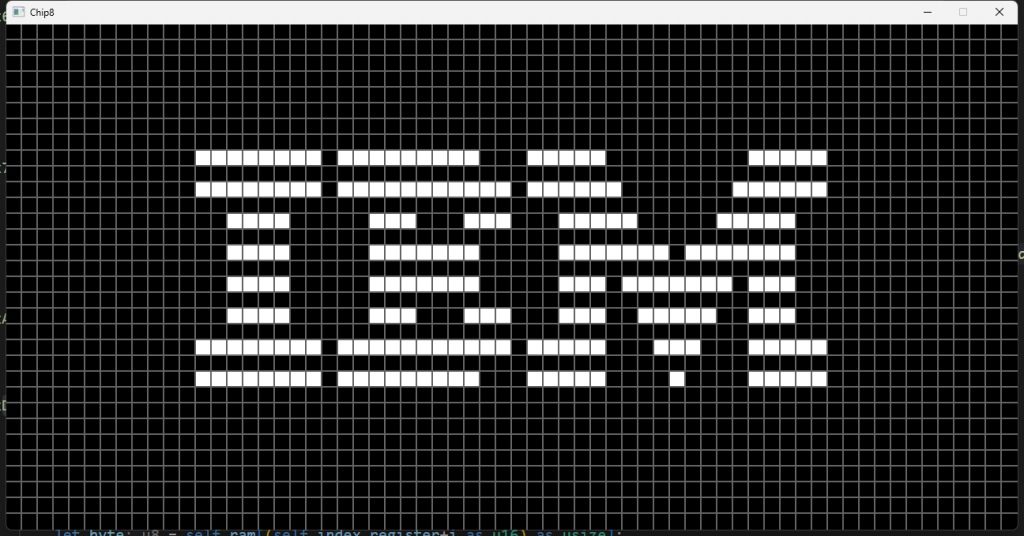
CHIP-8 emulator window in Rust showing the IBM logo test ROM
The IBM logo ROM, the first milestone

Day 2

I got momentum and started implementing the other opcodes. I ended up with a messy code, a giant switch where everything happens.

I need to take the time and do a proper refactor to it. I still thinking about how I am going to implement it and the lack of free time is not helping much.

I also added the default font sprites at 0x50. But didn’t find any ROM that actually uses it.

Not much to show or tell about, but as soon as I finish the refactor, I am going to post an update. The progress can be checked on the chip8 emulator repository.
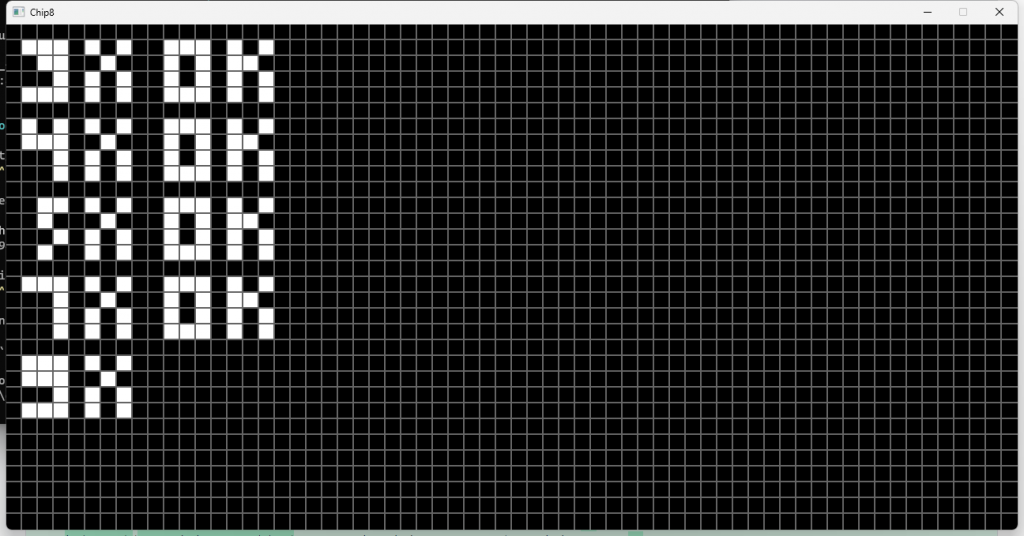
CHIP-8 emulator passing the test_opcode ROM, showing OK for each tested opcode
The test_opcode ROM reporting OK for each opcode

Day 3

Navigating through a couple of hectic weeks, just for a change.

However, today afforded me the chance to delve a bit deeper into the code. I refactored the video portion of the emulator, organizing the files and opcodes a bit more efficiently. There’s not much to showcase at the moment, but my current focus is on the 0x9xy opcodes.

Day Who Knows

This post sums up the small iterations of three different days. Basically, I implemented 9xy0 and cxkk opcodes, fixed some typos, corrected a few inconsistent implementations, and added SFML redraw only when the display opcode(dxyn) was called. Hence improving the performance.

I passed both test_opcode.ch8 and BC_test.ch8 test roms, which made many other roms work as well. I still need to implement the sound, input, and delay opcodes.

It’s been an enjoyable journey so far, besides taking a bit long due to the lack of free time. I am always thrilled when I get my hands on something different that’s not web-development related.
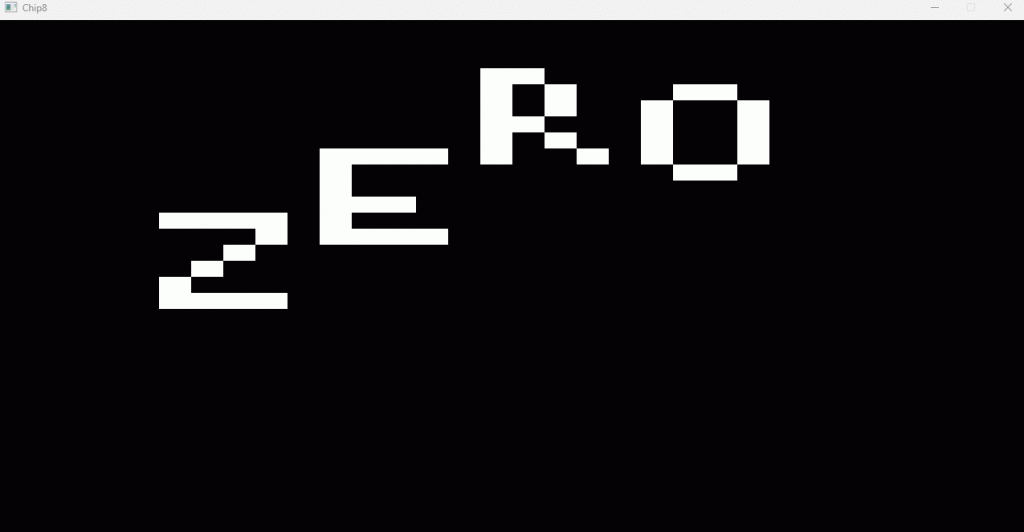
CHIP-8 emulator running the animated Zero demo ROM
The Zero demo ROM running

Day++

Yes, another post describing the few minutes put iterating on this project in a span of many days, and it has finally concluded!

I discovered a test suite with a few ROMs that assisted me in completing the development and addressing a few issues. I only encountered a challenge when working with the input, as it was not functioning properly. It turns out I was incrementing the program counter in different places, thereby causing unexpected behavior.

Once again, I find myself reiterating that it has been quite an experience. I relish the opportunity to work on projects outside my comfort zone, and I believe this project is markedly distinct from my day-to-day work, providing a valuable learning experience.

While it may not be the best code I have ever written in my life, I am satisfied with the result. Onward to the next one!
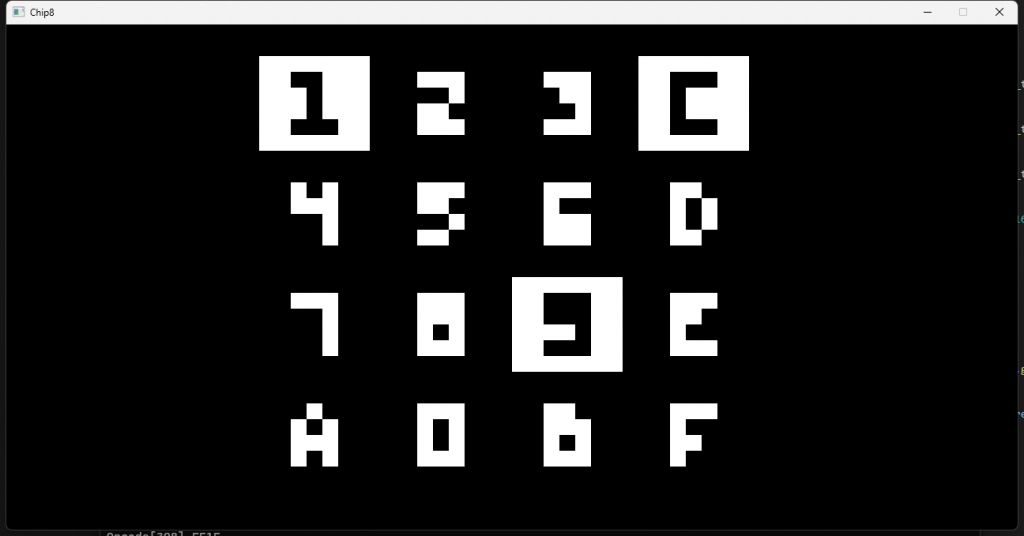
CHIP-8 emulator running the keypad test ROM with the hexadecimal keypad on screen
The keypad test ROM from the CHIP-8 test suite

Building a Snake Game in Rust with SFML

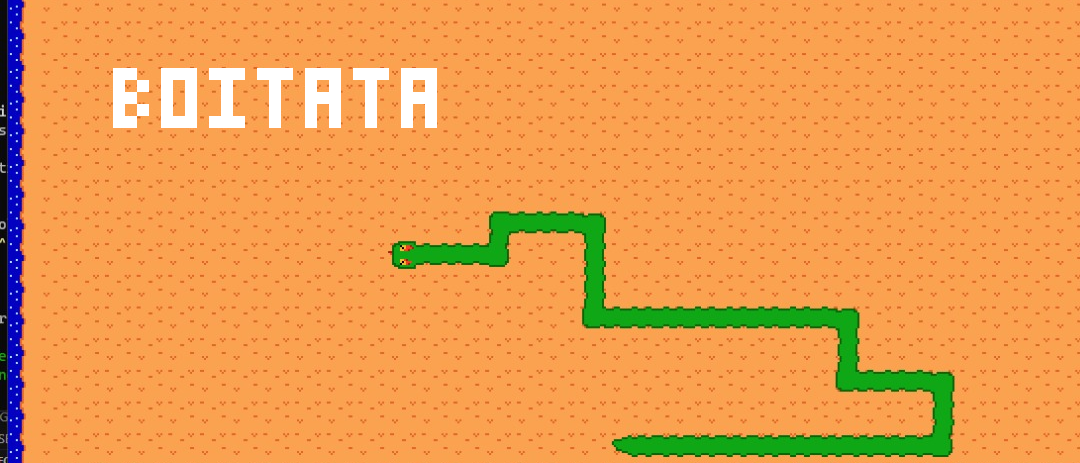
Boitatá, the finished Snake game in Rust, with pixel art snake sprites on a sand background

This post brings together the five entries of my development log for a Snake clone written in Rust with SFML, released on itch.io as Boitatá. The code is in the GitHub repository.

Day 1

Introduction

I have a strong passion for coding, but I often struggle when it comes to starting personal projects using the same languages and tech stack I use in my daily job. However, I believe in the importance of exploring new technologies and exploring different scenarios, so I’m using that as a driving force to learn and expand my skills.

Although it has been a while since I worked on anything involving visual interaction, I remember the immense joy I felt when seeing the results of my code with technologies like Processing or Flash/ActionScript over a decade ago.

With that in mind, I’ve brainstormed a few ideas and settled on a tech stack for my next project.

Why Rust?

The features of Rust have truly captivated my interest. I’ve thoroughly enjoyed every aspect of the language, or at least everything I’ve read about it so far. It seemed like a logical choice for this project, and if I end up not liking it, I can always switch to something else, right?

Why SFML?

I had some prior experience with SDL2, and SFML appeared to share many similarities with it. However, SFML offers the advantage of wrapping everything in classes, while SDL2 requires the use of long and cumbersome functions. Don’t get me wrong, SDL2 is impressive, but its extensive portability wasn’t necessary for this project.

Why not a game engine?

My primary goal is to learn new programming languages and libraries, rather than focusing solely on game development. The game portion of this project serves as a familiar concept that I can work with and learn from. In fact, I don’t want to limit my future projects to game development alone; they could also involve creating my own GUI toolkit or exploring data visualization.

First day progress:

My approach is to tackle this project without relying on tutorials or lessons, although I will make use of documentation and StackOverflow as needed.

To begin, I cloned the rust-sfml repository and followed the instructions. Once I had it up and running, I created a separate repository for my project and added a boilerplate code to create a window and an event listener.

From there, I started implementing the basic features of the game. The process went smoothly, and by the end of the first day, I had a satisfactory prototype that included:

  • A snake rendered on the screen and controlled by arrow keys
  • Food items randomly placed on the screen, which, when consumed, increased the snake’s size and speed

Although there is still a lot more to do, you can track the ongoing progress on the GitHub Repository.

Moving forward, my plan is to focus on the following tasks:

  • Organize the files into modules
  • Implementing hit detection to walls
  • Implementing hit detection to snake’s body
  • Adding game-over functionality, score tracking, and a restart option
  • Implementing an FPS cap and detection mechanism.
  • Improving the snake’s speed code.
  • Enhancing the snake’s movement code.
  • Adding sound effects.
  • Adding actual graphics
  • Learn how to use the debugger
  • Implement automated tests

Final Notes

This project has been an exciting and unique experience for me, and I’m eagerly looking forward to starting other projects as well. Even at this early stage, I can already appreciate the power and potential of Rust as a programming language. I’m still learning and grasping its concepts and syntax, so please bear with any unconventional code you may come across.

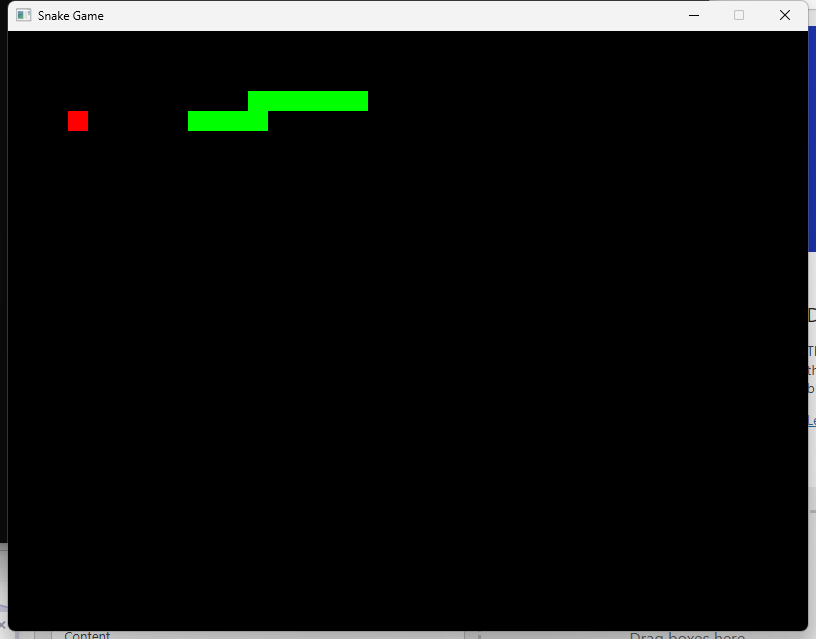
First Snake prototype in Rust and SFML: a green snake and a red food square on a black window
The first prototype at the end of day 1

Day 2 and 3

Day 2

My second day with this project was focused on partially refactoring the code.

I created different modules for the game, snake, and food entities. Also created a module for the direction enum… despite not being needed.

It took quite a while to move code from here to there and solve every complaint from the compiler. Then, I implemented a few getters and setters and removed the pub keyword from the struct members.

The worst part was passing the RendererWindow declared in main to a function implemented for the game type. Oh boy… it was solved using the &mut keyword but I felt like throwing spaghetti at the wall.

I finished with housekeeping. Adding license, updating gitignore, and deleting a few IDE files.

Day 3

My first task was fixing a bug related to the snake’s movement. When a quarter-circle was performed with the arrow keeps it was possible to get the snake heading to its own body.

Later I implemented a few new features: wall render, wall collision, snake body collision, and game over/reset.

I had no hard time implementing anything on day 3.

Final Notes

The 3rd day was a breeze. Probably because it was just programming and I didn’t deal with anything related to Rust syntax and semantics. The 2nd day, however… was a learning experience.

What’s next? graphics? main menu? maybe learn how to read and write a file for high-score records? Soon…

Samuel L. Jackson on the phone in the movie Snakes on a Plane

Day 4

I started this iteration by fixing a few bugs and then proceed to add the screens for the different game states(game over, main menu, high scores). It was a quick and dirty iteration just before calling it a day. But since everything happened within 24 hours I am mentioning it.

Then, I created modules for every screen and improved the code to remove any duplicate code and redundancy. Now every screen module is composed of two main functions: render and handler. The further first dealt with key codes but soon it changed to all events.

I committed my changes and started working with the high scores, both recording the values into a file and also fetching it. I got everything working, except the high score display. Dealing with Strings or str within structs or returning was a mess. I went into many lifetime issues when working with it.

I decided to ditch everything related to the high-scores and start over. No git commit was done.

Final Notes

I like to have small iterations to get something working followed by a refactor, but this time I had to rethink my strategy. I understand the causes of the issues I ran into, but I am still learning the language to know how to deal with it.

Tom Hanks holding a crab on a stick in the movie Cast Away

Day 5

It’s been some busy weeks for me. So I had to slow down my side projects.

Well, I finished the implementation for highscores. Returning a struct with strings is way harder than I anticipated. I used another approach, fetching the values when needed.

I am not happy with the final implementation, but I can always refactor it when I fully understand the language and its concepts.

Oh, I forgot to mention it in the previous post. I got the debugger running and it was one of my goals.

I also moved the project to Linux. Had a hard time setting up the SFML/CSFML dependencies, but everything went ok after I changed the crate dependency to the rust-sfml git repository.

Final Notes

Well, not much was achieved. But I finally got the highscores working. I am just going to implement graphics and sound and then finally call the project done.

Hope the next iteration happens soon.

Crab on the beach at sunset

Day 6

As I mentioned in my last post, I’ve had some really busy weeks – actually, it’s been busy for months now…

I was still contemplating whether to transition to another project since we had pretty much accomplished all the challenges and goals for this one. But in the end, I decided to continue and incorporate both graphics and sound.

I began by creating a sprite sheet and then proceeded to load the textures. Within just a couple of minutes, I managed to transform the food item rectangle into a sprite, and from there, I updated the snake graphics and later, the wall graphics. I also added a subtle sound effect for when the food item is consumed.

The entire process was fairly straightforward and uncomplicated; the only challenging part was ensuring that some segments’ rotations were correct (e.g., graphics for movements from Left-Top needed to be rotated 180 degrees in comparison to Top-Left movements).

With the project now considered complete, I’ve posted it on itch.io. You can check it out by clicking here. I’ve also updated the code on its GitHub repository.

I already have a few ideas for my next projects and will be sharing them here soon!

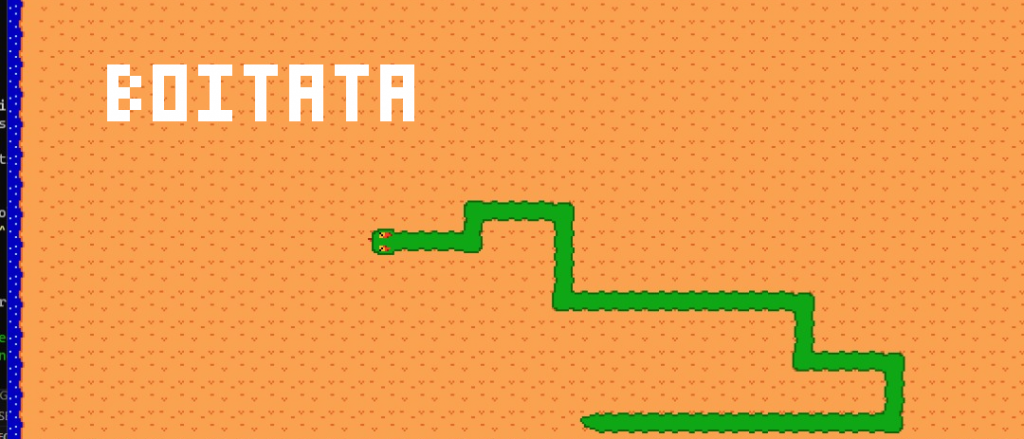
Boitatá, the finished Snake game in Rust, with pixel art snake sprites on a sand background
Boitatá, the finished game

What have I been doing?

What have I been doing?

Well, it is pretty hard to answer.

No matter how tough you are, the pandemic hit us hard. I was able to manage the two years after I dived into work.
I literally worked as many hours as I worked back when I just started my career. I was thrilled and had an exciting drive. The project I was working on needed many features and during business hours, I rushed to create endpoints and features; by night, I improved tests and documentation.

Soon, stress and panic attacks took over the excitement and drive I had while I coded. One day I simply fell during the shower due to dizziness, and that made me reevaluate the whole situation.
It turned out impossible to dedicate myself to personal projects or any activity I love. At that point, I struggled to do the basics.
Don’t get me wrong, I loved that company and I am completely grateful for such an opportunity. I spent 6 years of my life there and to be honest, I never completed 2 years in a company before because there was always a better open position. I learned a lot and worked with skilled people that were always willing to share knowledge and experience.

The company and the projects suffered a few changes. We moved all our codebase from Azure Functions NodeJS to C#/NetCore6. It’s supposed to be a great learning experience and growth opportunity. But to me, it simply wasn’t.
The stress and panic attacks turned into a burnout and I, for the first time, had no joy in coding. My productivity dropped drastically and I had a hard time keeping focus or finishing my deliverables. It was frustrating to see myself acting like that, I really wanted to be a good employee and programmer.

So I took the decision to check new opportunities, to answer every recruiter on LinkedIn, and to apply to great companies. My mistake was not taking a period for myself but starting to enroll in many recruitment processes. I started a trial process in a company that really knows how to treat its staff, but I messed up… I messed up really hard because I still couldn’t focus and work like before.

Fortunately, I was accepted by another company. They really liked my experience, knowledge, and way to solve problems. It’s been a great experience so far and the level of pressure, stress, and work volume have been completely bearable for my well-being. Well, let’s not forget that 20 days into the new company I got appendicitis and it burst. Maybe it’s my body’s response to everything I went through before, maybe it’s just a coincidence. But I am getting better every day.

I started plentiful projects and/or activities in the past three to four years, some I had to drop, and some I wasn’t motivated to keep on. I am going to comment on a few:

VST Plugin – Boss HM2

I created a rough VST plugin effect simulating the infamous Boss HM-2, known for its chainsaw sound and notorious for the old-school Swedish death metal guitar tone. It was created using iPlug2 and faust language and consisted basically of an asymmetric clipping stage followed by three parametric equalizer filters(one for the low knob and two for the high knob). It did the job surprisingly quite well, but nothing different than what could be achieved using any good distortion plugin followed by any equalizer plugin.

For my very first project, it was fine, but my goal was to model the effect after the real circuit and soon I was dealing with quadratic functions, filter topologies, frequency response functions, thick signal processing books, and many things I wasn’t ready to deal with. At least at that moment and with the volume of work I was dealing back then.

It was a fun experience and I definitely plan to go back to it, but I still need to understand a lot of signal processing to be able to model the circuit schematic to the proper equations and functions.

Poetry

One day I was just laying down in bed and I had a moment where the words started coming to my mind. I got up and started writing non-stop until I finished my (very first) poem.

I really don’t know how to explain how it happened, maybe it was inspiration? I don’t know. It happened a few times more and now I am trying to write on a regular basis, even if it’s not something that I find good… I can’t rely on inspiration every time.

Vermicomposting

Since I have a couple of birds, there is always a few fruit leftovers that they reject during the day and I also deal with cardboard and paper bags from services like Amazon. Considering this, I decided to start a worm farm.

There is not much to say, they kinda do all the work for me. But it is really exciting to research and understand more about these detritivorous creatures… and obviously reduce my waste output

Gardening

After these years, I ended up moving to an apartment with an external area and, combined with the worms mentioned earlier, sounded like the perfect environment to grow some crops. I have quite a few pots with different herbs and chili peppers, I am still considering getting bigger pots to have larger plants.

Compared to my usual activities, it’s something completely different to have small interactions and see the changes after some days or weeks.

Fermenting

I started and brew a few batches of Kombucha during the pandemic. It worked well and I am definitely revisiting it soon. Recently I also did my own hot sauce, even bottled it into small glass bottles to give it a gift to friends. Oh… did I mention I grew the chilies?

URL Shortening and PasteBin clone

As a way to learn and keep myself motivated, I like to start personal projects using languages and technologies different from what I use while working. Since I never used MongoDB(or any NoSQL), I decided to do a couple of simple projects.

With ExpressJS and MongoDB I created my own version of Pastebin and URL shorter for personal use.

What’s up next?

Well… I am planning to keep track of my new or ongoing activities and projects here. It’s quite abandoned right now, to be honest.

I feel quite insecure to open the source of some projects, like the VST or the ExpressJS/MongoDB one, at least when working with something I am still learning and I don’t dominate yet. It feels like I am showing all my mistakes to the world.
But well… I am starting a new project with Rust and SFML, my goal is to document (and commit) every step and hopefully start new projects after the first one.

So please, unlike the B string of my guitar: stay tuned!